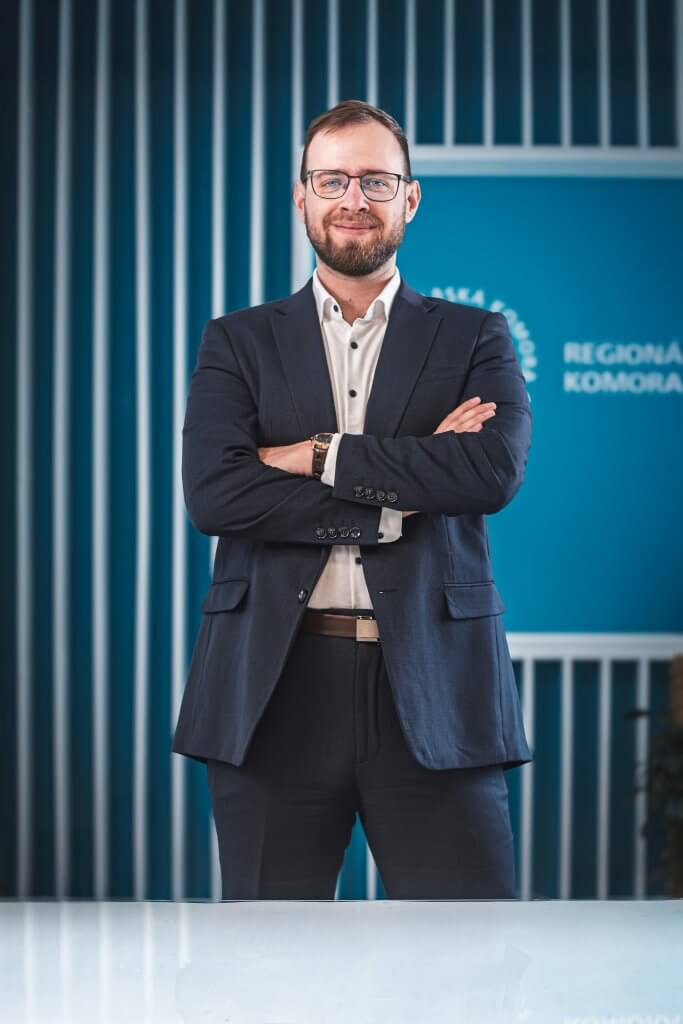
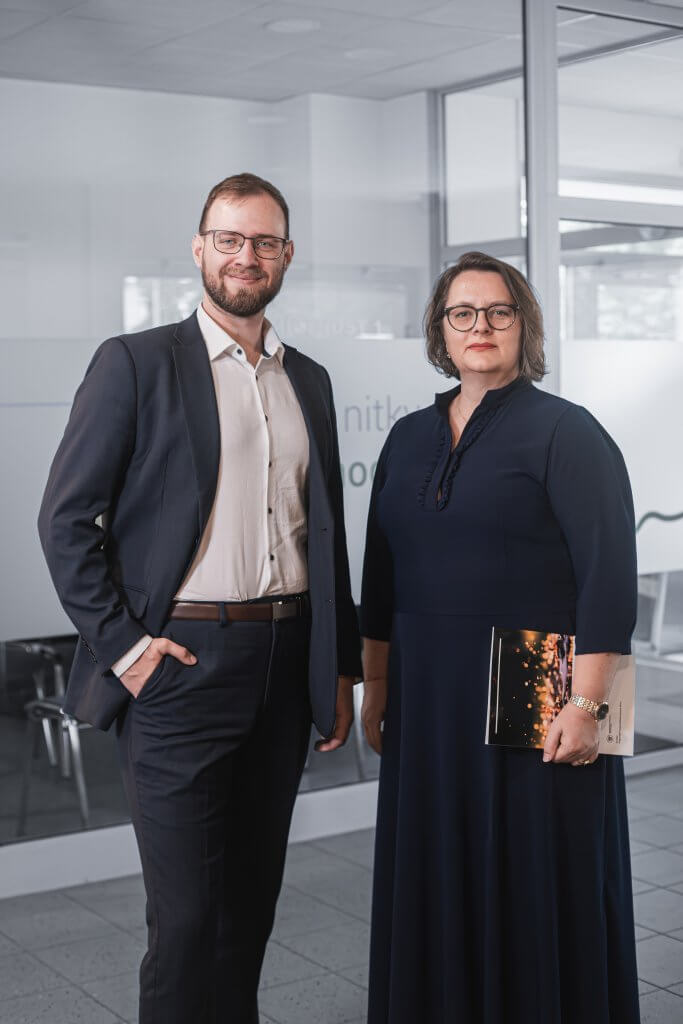
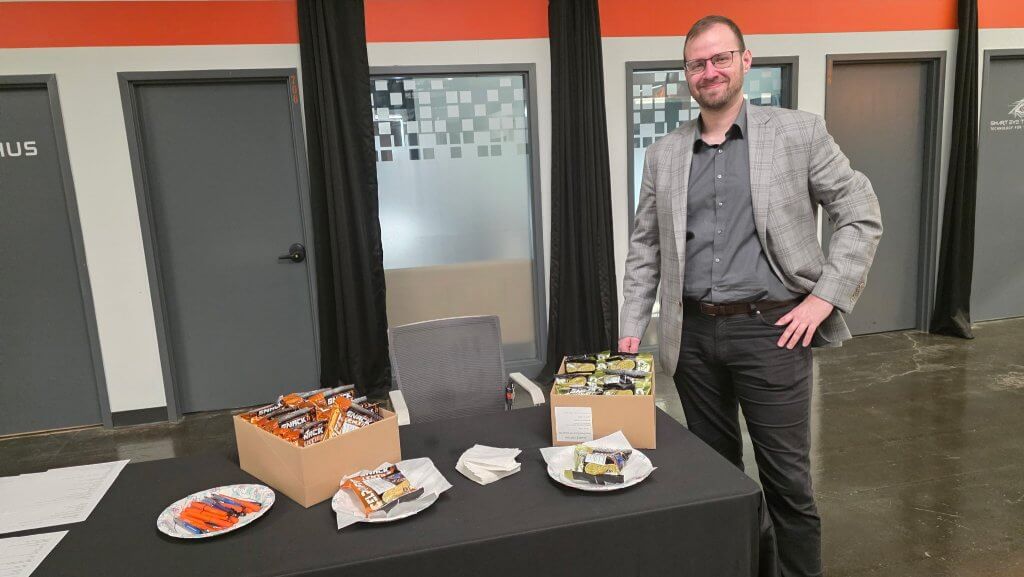
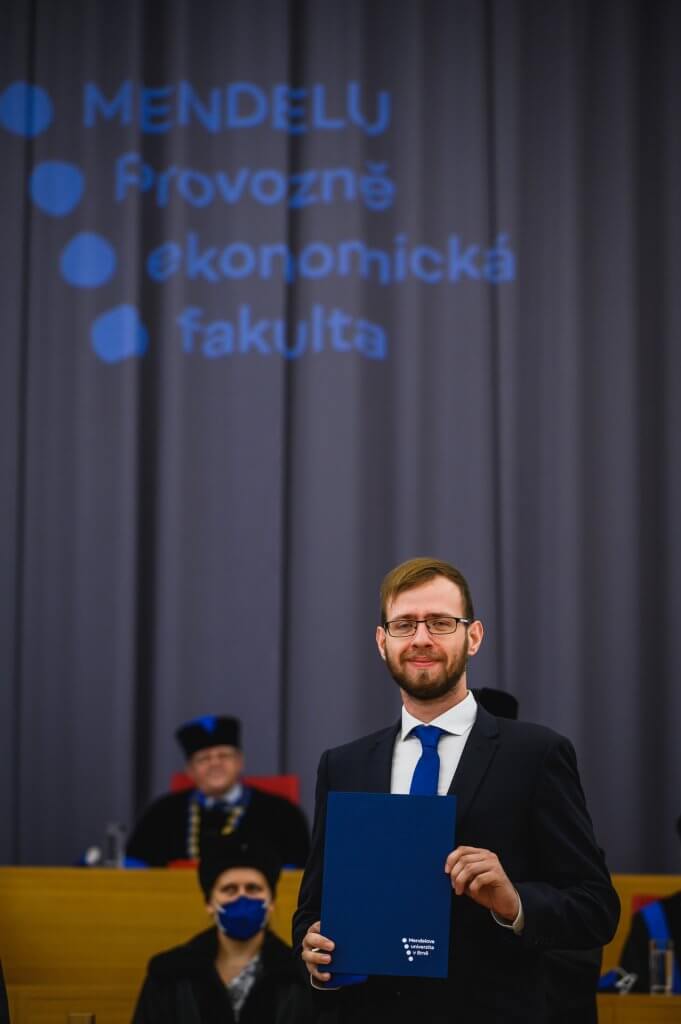
Ondřej Rolník has been living in Atlanta, United States, for almost a year, where he serves as Managing Director of the Czech Business Incubator Atlanta, helping Czech companies expand into the U.S. market. At the same time, he is completing his doctoral studies at the Institute of Economics. According to him, his experience in the leadership of the student union and the academic senate has significantly contributed to his professional development. “In the end, there isn’t a big difference between negotiating with company executives and with university leadership,” he says. In this interview, he talks about his work, studies, and the specific aspects of doing business and living in the United States.
What led you to the work you do after graduating?
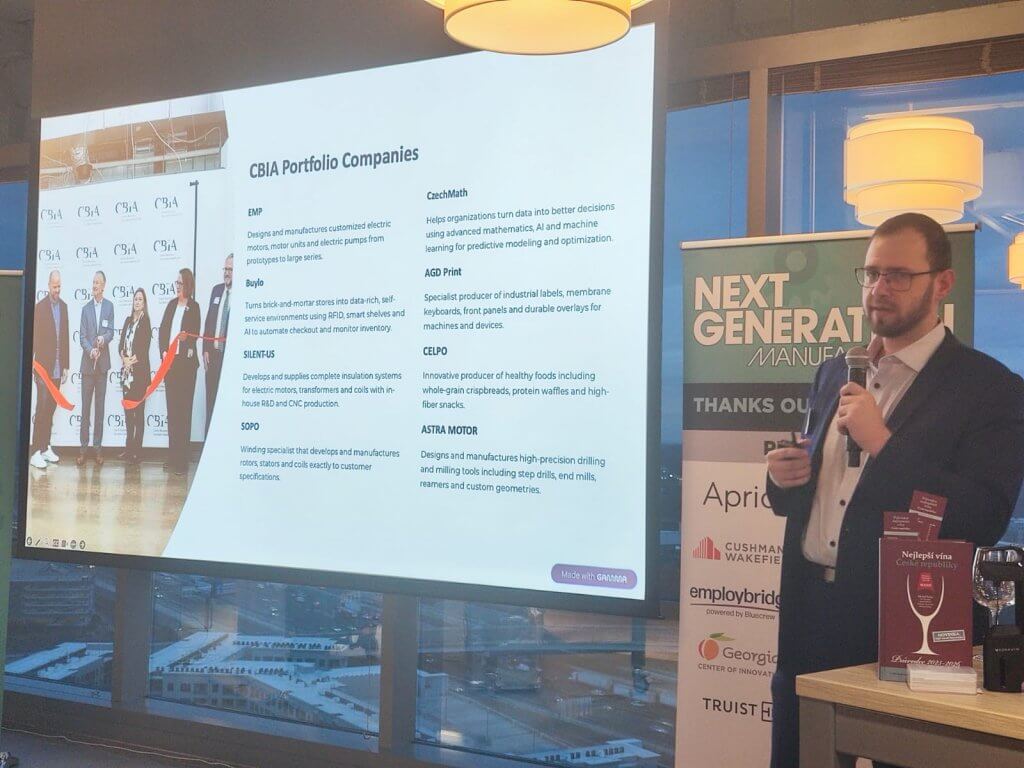
During my PhD studies at the Faculty of Business and Economics at Mendel University, I worked for a Czech company called CzechMath, where I was responsible for project management, business development, and acquiring new clients. Together with CzechMath, we took part in a business delegation organized by the honorary consul in Atlanta, Monika Vintrlíková. Along with several other Czech companies, we were invited to a “Soft Landing” program focused on expansion into the U.S. market, as well as the official opening of a new incubator. By coincidence, the newly established Czech Business Incubator Atlanta was at that time looking for someone to lead it—someone with strong English skills and experience in project management and business development. That description fit perfectly with what I had been doing at CzechMath, so things moved quickly. We aligned on the opportunity, sorted out the visa process, and I subsequently relocated to the United States. CzechMath became part of the incubator, and from Atlanta I continue to support, among other things, their business development on the U.S. market.
Czech Business Incubator is a relatively new organization. Can you briefly explain what exactly you do?
We help Czech companies enter the U.S. market and grow their businesses in the United States. We believe that Czech companies are technologically on par with competitors from Europe and other developed countries. However, in the Czech Republic, companies often run into the limitations of a relatively small domestic market. The United States offers a completely different environment in terms of growth potential and scalability. At the same time, it is one of the culturally closest non-European markets for Czech companies, which makes the first steps and overall adaptation much easier.
How many Czech companies are currently operating in Georgia?
There are currently only a few Czech companies in Georgia that entered the market independently in previous years. Compared to other European countries with similarly sized economies, this is still a very low number. At the same time, we are convinced that Czech companies have the quality and capabilities to compete with anyone on the U.S. market.
What, in your view, is preventing Czech companies from expanding more into the U.S. market?
The barriers to entering the U.S. market are relatively high for Czech companies. They typically have no local contacts or experience with the environment, which makes it difficult for new entrants to find a trustworthy partner directly in the United States. Companies can, of course, hire American lawyers or consultants, but if these professionals do not understand the Czech context and the specifics of Czech businesses, the entire market entry process is often unnecessarily slowed down. As a result, it can become frustrating and disproportionately costly for companies.
How exactly do you help Czech companies enter the U.S. market?
We aim to act as a partner who understands both sides—the Czech business environment and the U.S. market. Thanks to that, we are able to significantly simplify the entire entry process for companies. We help them build connections, navigate the local market, and take their first business steps. This allows companies to focus primarily on their product and sales, rather than spending their first months dealing with administrative hurdles and building a network from scratch. We most often work with companies from the South Moravian Region.
In your view, where do Czech companies have the greatest chance of succeeding on the U.S. market?
European technology and innovation have long been of interest to Americans. In some areas—such as automation—we in Europe are often even a step ahead. In the Czech Republic, we have high-quality technology, strong know-how, and skilled people, and in certain fields we are able to offer highly competitive solutions, whether in automation, industrial technologies, or the development of innovative products.
Why should Czech companies entering the U.S. consider starting with you in Georgia?
Atlanta is one of the most important business hubs on the East Coast of the United States. It has a strong presence in manufacturing, fintech, the entertainment industry, and logistics. After Hollywood, it is home to some of the largest film studios in the country, and at the same time it serves as a major manufacturing and logistics hub with one of the largest commercial ports in the U.S. That said, we do not necessarily recommend that companies focus only on Georgia. Rather, this is where we have the most experience and the strongest network, and where we can best support companies with market outreach and entry into the U.S. market. Beyond Georgia, we also focus on the broader Southeastern U.S., including states such as Alabama, Florida, Tennessee, North Carolina, and South Carolina, where we have strong connections and a solid understanding of the local business environment. Gradually, however, we are expanding into other states as well, such as Texas, Iowa, and Virginia.
What does your typical workday look like?
I currently manage around eight companies within the incubator. Five of them operate in a standard membership model, so I dedicate one full day per week to each of them in a structured way. The remaining three operate in a more individualized setup. The American way of doing business differs in many ways from the European one. In the U.S., relationships and trust are built first. You go for lunch, coffee, or even a round of golf together, and only afterwards does the actual business proposal come into play. That’s why a large part of my work consists of networking and in-person meetings. A typical day therefore starts with online meetings with the Czech Republic. After that, I move to the office, where I have meetings with the honorary consul and founder of the incubator, Monika Vintrlíková, as well as other partners or potential clients. In the evenings, I often attend various networking and industry events.
What do you enjoy most about your work?
It’s not a stereotypical office job behind a spreadsheet. On the contrary, I’m constantly in contact with people, and every day looks different. What I described earlier is more of an ideal day—one that realistically happens maybe once a month. The reality is much less predictable. But it’s exactly this dynamic nature that keeps me going. I enjoy how varied the work is and how there’s practically no downtime. Even though it can sometimes feel demanding, I can see tangible results behind me, and that’s what motivates me to keep pushing forward.
How did you gain the experience you use in your work today?
For someone without long-term professional experience, it’s extremely important to demonstrate that they are proactive, capable of taking responsibility, and able to work effectively with people. For me personally, this was greatly supported by my involvement in the leadership of the Student Union at the Faculty of Business and Economics at Mendel University, as well as my role in the Academic Senate. Through this, I learned how to communicate with university leadership, negotiate, and handle various unexpected situations. And honestly, in the end, there isn’t such a big difference between negotiating with company executives and with university management—the principles are quite similar.
At MENDELU, you were mostly operating in a Czech environment. How did you get used to communicating with Americans?
Atlanta is an extremely multicultural city, and in addition to native-born Americans, I also work with people from various parts of Europe and Asia—particularly South Korea, which is currently the strongest investor from the Asian region. A big advantage for me was that at university we had courses focused on business negotiation with international partners, so I was able to build a solid foundation already during my studies at the Faculty of Business and Economics.
In addition to your work, you are still completing your PhD at the Faculty of Business and Economics at Mendel University. What is your doctoral research focused on?
I have always been interested in politics, so I naturally gravitated toward political economy and public administration. In my master’s thesis, I already focused on the topic of political polarization. I examined how voters in individual countries become increasingly divided into more distinct ideological camps—typically the left and the right—and how this polarization evolves over time in relation to socioeconomic factors. I am continuing on the same topic in my doctoral research. I am gradually expanding the scope to include additional countries and regions, while also incorporating various socioeconomic influences that shape political polarization and affect its broader impacts.
Which people at PEF MENDELU influenced you the most during your studies?
At our faculty, I’ve always perceived it as standard that lecturers are close to students, open to discussion, and actively involve them in what is going on. On a personal level, I was strongly influenced, for example, by Martin Machay, who sparked a deeper interest in economics in me. He is an extremely passionate lecturer, and he showed me that economics is not just about memorizing theories, but primarily about understanding broader connections. In later years, I was also significantly influenced by Jan Rozmahel, who supervises my doctoral studies. I greatly appreciate his enthusiasm for academia, which he has passed on to me, as well as his human approach toward both students and colleagues. Colleagues and friends from the Institute of Economics also played an important role for me. I always knew I could rely on anyone from the institute, and I attribute a large part of my academic development to them.
Are you able to stay connected to the academic environment even outside your PhD studies?
In essence, yes. The academic environment remains part of my work. For example, last year we welcomed representatives from Mendel University in Georgia, where they signed a memorandum of cooperation with ABAC (Abraham Baldwin Agricultural College). In my view, business and universities should be closely interconnected, and the relationships between schools, students, alumni, and companies are highly important.
What would you recommend to students who want to work abroad one day?
Be active. Attend various university events, get involved in student organizations, meet people, and build your network. Students often feel that the people they meet at university are just classmates, but in a few years, these relationships can turn into important professional connections. Make use of everything the university offers beyond lectures, and start as early as possible. I personally got involved more actively later, and now I know there was no reason to wait. International experience was also crucial for me. I completed internships in Belgium and Austria, and both experiences taught me a great deal. I learned how to operate independently in a foreign environment. And of course, English is essential—without it, it’s very difficult to move forward.