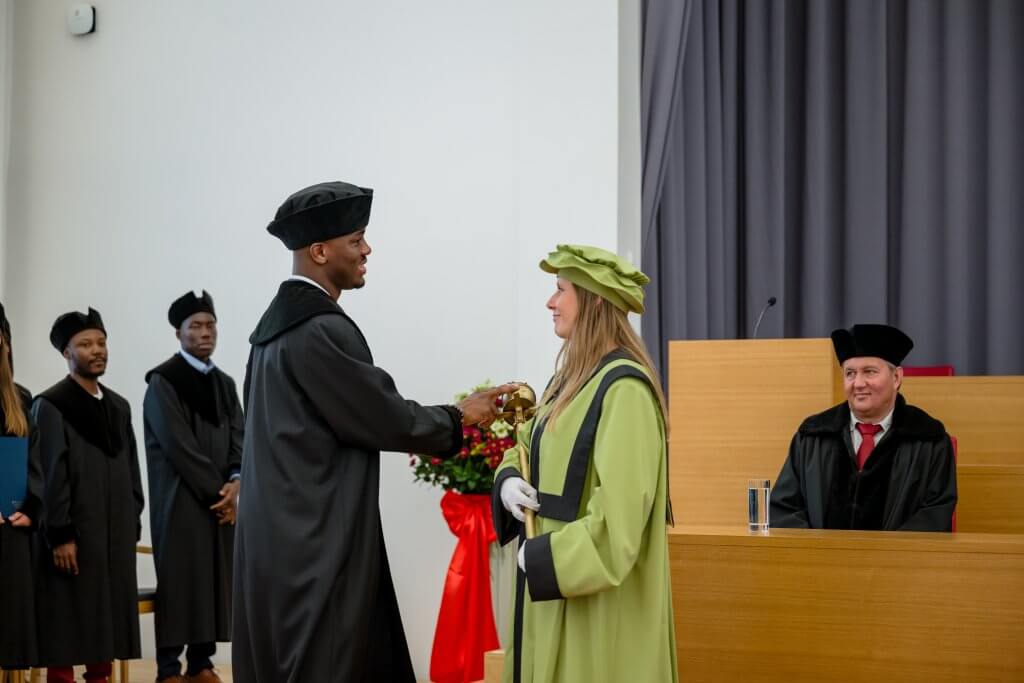
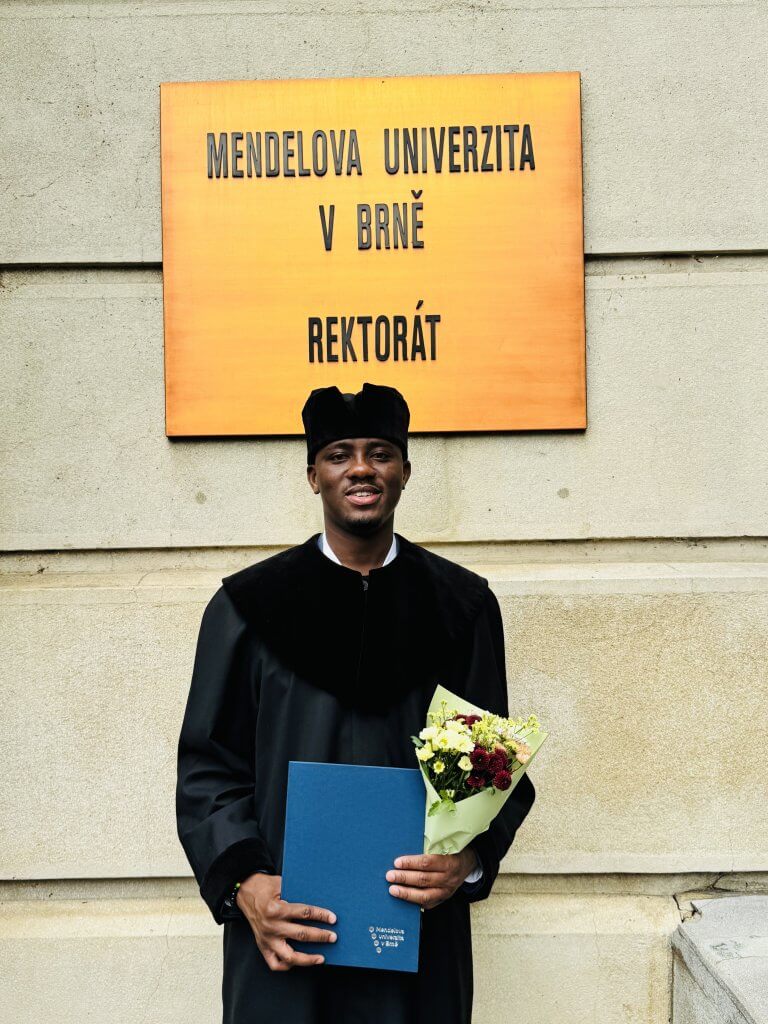
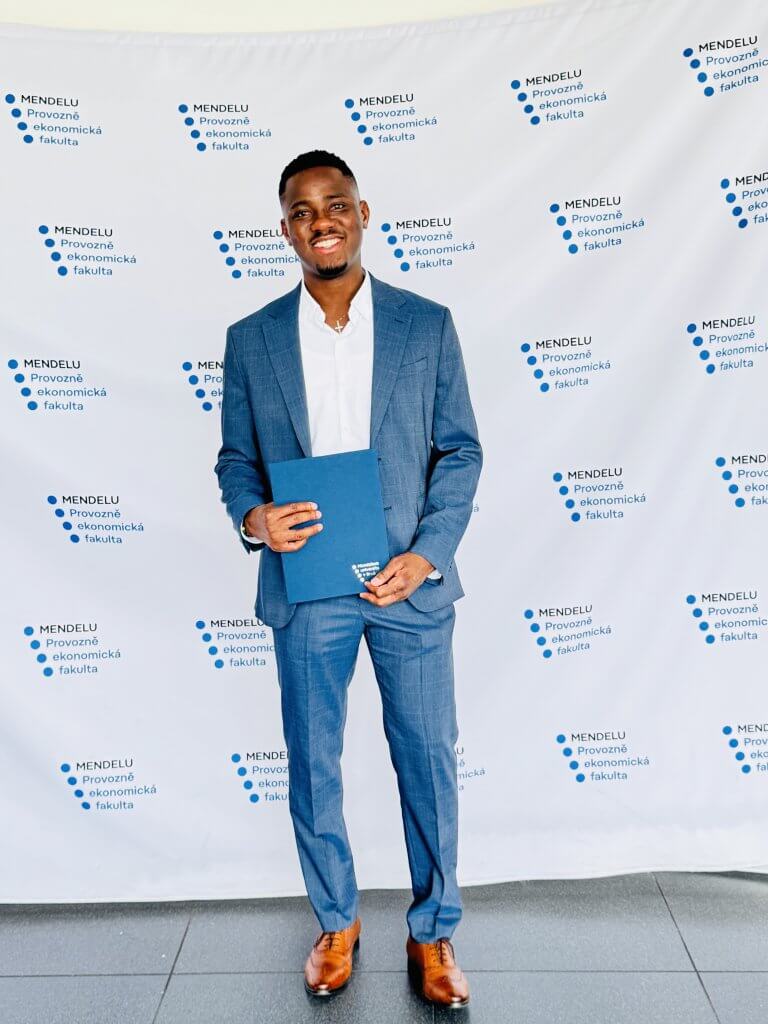
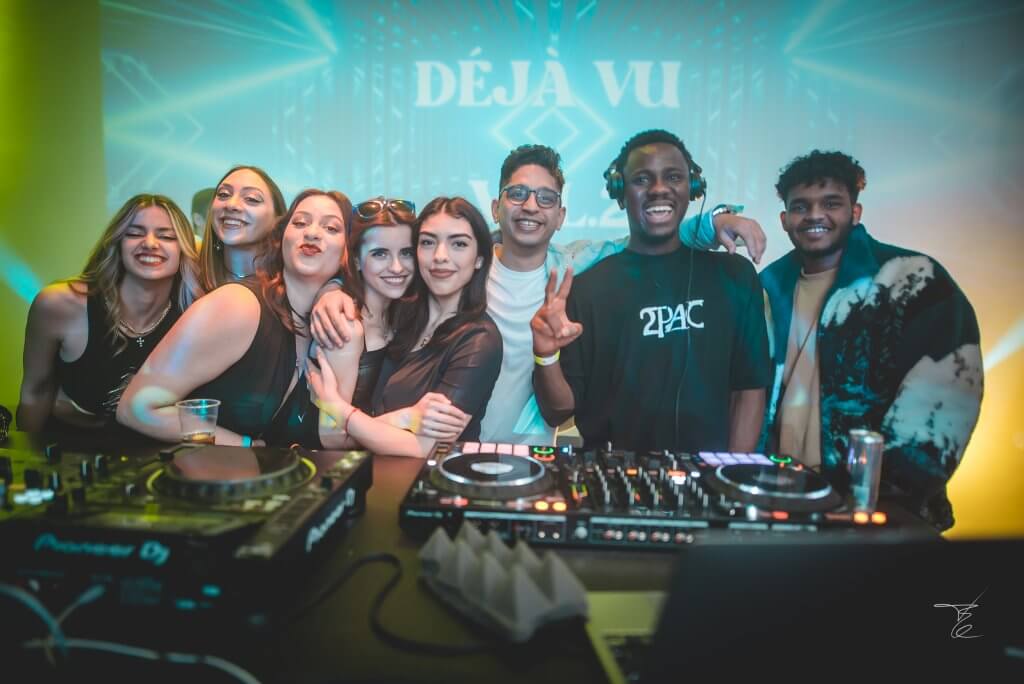
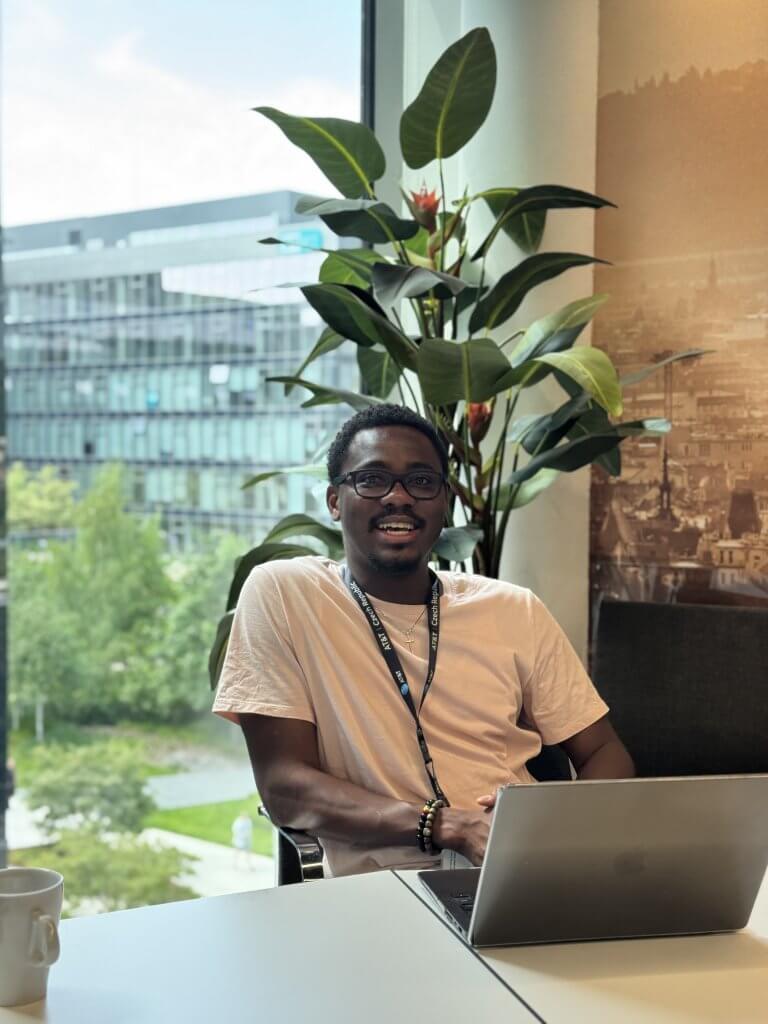
Emmanuel came to Brno from Ghana looking for independence and new experiences. Over the past ten years he has been living in Brno, where he studied Economics and Management at Faculty of Business and Economics of Mendel University. During this time, he also organized popular Afro-parties, and launched his startup, Slistter, to help West African markets. “The idea is to gain knowledge and experience, and then use it to build our country,” he says. His story shows what you can learn from adapting to a new culture, finding meaningful work, and turning international experience into real impact. Read the full interview with this inspiring young entrepreneur.
Emmanuel, can you tell us a bit about where you’re from and how you first became interested in studying abroad?
I’m from Tema, a coastal city in the southern part of Ghana. When I started looking for opportunities to study abroad, I knew I wanted to experience something beyond my home country. Back in high school, the U.S. was where I really hoped to study, since that was the most familiar option to me at the time. I hadn’t yet explored much about Europe and when I did, I first thought of the U.K., not countries like the Czech Republic or Germany.
Can you tell us how you first became interested in studying in the Czech Republic?
A friend introduced me to the possibility of studying here. At that time, I was only familiar with the country only because of football, the 2006 World Cup in Germany, when Ghana played against the Czech Republic. You had a really good team back then but well, we beat you!
What made you think, “All right, I could actually live and study here”?
I wanted independence. I was only 20 when I came here, and I wanted to step out of my comfort zone, experience a new culture, and explore the world. Another major factor was practicality. Studying in the Czech Republic is much more affordable compared to the U.S., and the program itself, Business and Economics, was exactly what I wanted to study. Altogether, those things made the decision clear and easy for me.
Do you remember what it felt like when you first came to the Czech Republic?
Oh yes, I remember it vividly. Let’s go back to around 2015 or 2016, when I first came here. I definitely experienced a cultural shock, everything felt different, even the parties. I remember going out and the DJs would play drum and bass or techno all night, but I was missing the kind of music we grew up with. Sometimes me and my friends would even go to the DJ and ask them to play something from Ghana or other Hip Hop artists, but it wasn’t really their scene. So one day, we thought, why don’t we just organize our own parties, where we play the kind of music we love?
So you started organizing parties for the African community here?
Yes, and it came sort of by an accident. At that time, I was living in JAK dorms, and there is Green club, where Erasmus and international students are used to hang out. One night, there was a guy DJing and I asked him to play a track from Ghana. When people heard it, they loved that. So that’s how the idea of „let’s throw an African party“ came from!
Me and my friend Adoneez created an event on Facebook, and suddenly people started showing up. Not just from the African community, but also students who liked hip hop, Afrobeat, and Latin music. From there, we started organizing more events and it became very popular. Those parties gave me a real sense of purpose like I was doing something meaningful by bringing people together. Seeing everyone connect and enjoy themselves was truly rewarding.
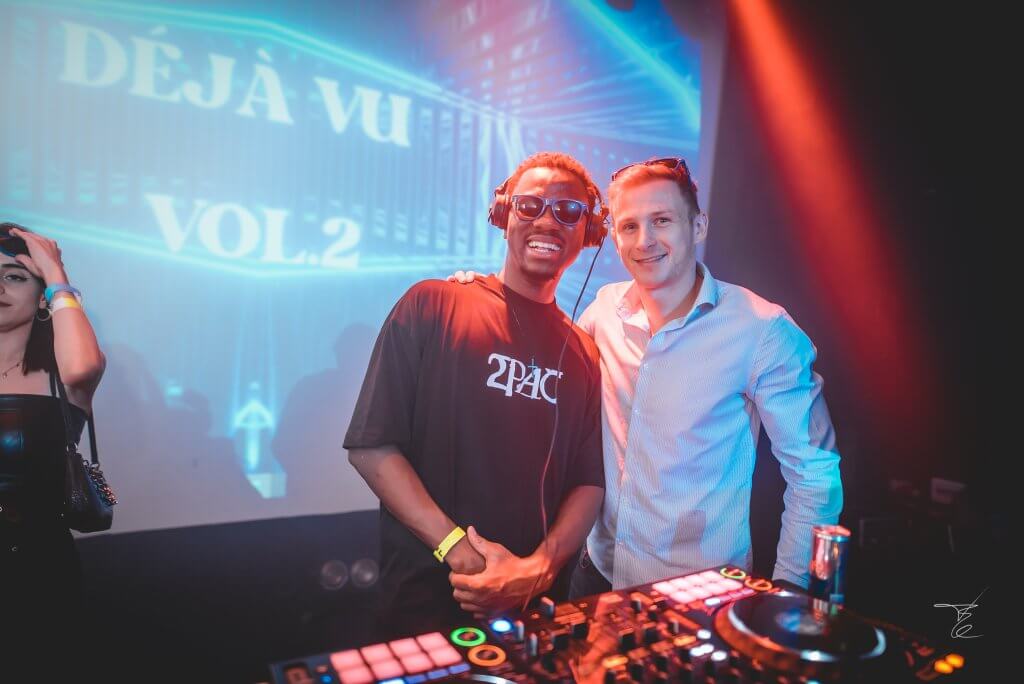
How do you remember your days as a DJ in the clubs, is it something you’re still doing?
I‘ve played in almost every major club in Brno: Sono, Fléda, Favál… you name it. Over time I started mixing in more European music and playing for broader audiences, not just African events. It’s been a great experience overall.
I think the parties are still going on today, but Adoneez and I no longer participate. The community we built has changed, most of the people from the scene have finished school and left the country. So it’s probably a bit different, but the idea of Afroparties in Brno is still very popular and vibrant.
I’d like to go back to your studies. What made you decide to switch from economics to informatics?
When I first came here, I enrolled in the Economics and Management program for English-speaking students. But even then I was already interested in programming. We did cover some informatics-related subjects in the curriculum, but it wasn’t the main focus of my studies. After completing my bachelor’s degree, I got a job in IT and spent almost four years working in the field. That experience made me realize I didn’t see myself pursuing a career in economics, so I decided to switch to IT. It was really challenging, I realized I needed more programming experience than I had, so I dropped out, studied programming on my own, and then re-enrolled back after two years.
What experiences during your studies had the biggest impact on your future direction?
For my master’s thesis, I built a price comparison app for Ghana and West Africa. My supervisor, Mr. Dařena, encouraged me to create something that could really help my country. He inspired me to see that I could use what I’ve learned here to make a real contribution back home. There’s this idea that we come here, gain knowledge and experience, and then use it to build our country. That motivated me to take action and start something meaningful for Ghana. So I started working on my thesis, which eventually overgrowth into my current business I am building now.
How did you come up with the idea for your business, and what problem does it address?
In many parts of West Africa, prices aren’t regulated. Sellers set their own prices, and they can change them anytime. For example, you might go to a shop where an item costs 500 crowns, and half an hour later, it could be 750 or even 1,000 crowns. There’s no transparency, and customers can’t make well-informed decisions. That inspired me to create a solution.
What’s the next step in developing your app?
The app is still in development. Right now, the data comes from Amazon, but the next step is to let vendors list their products directly, set their own prices, and offer deals. A major focus is also on security, ensuring that consumers are protected from fake prices or misleading offers, which is a widespread issue in Ghana and across Africa. The next version of the app will feature a completely redesigned user interface, which is already in progress.
What made you realize this is where your effort could make the biggest difference?
I believe Africa doesn’t need to jump straight into building AI or highly advanced technologies before covering the basics. The bare minimum like functional, reliable digital services, hasn’t been fully implemented yet. The situation in Ghana is very different from the Czech Republic. Here, most shops already have their own e-shops, but in Ghana, that’s still rare. My goal is to give visibility to everyone, helping even the smallest businesses reach customers online.
How many people work at your company right now?
We’re still at the foundational level. I have a couple of people in Ghana working on marketing. And for product management or other roles, I have friends who are ready to step in when needed. At this stage, I’m not able to pay them or provide reimbursement, but when the time and right investment come, there’s a team ready to fully commit and help bring the project to its full potential.
How do you plan to manage your business between Ghana and the Czech Republic?
It really depends on securing the right investment. This kind of company needs solid funding to grow. Slistter, is registered in both countries. I plan to keep our development team in the Czech Republic, while operations, marketing, and other activities run from Ghana.
I also want my European developer friends to experience working in Ghana as well to see the market, the culture, and the opportunities firsthand. Ideally, I’ll be traveling between the two countries, managing both sides. Europe has become like a second home to me, and I want to keep strong ties here even as we grow in Africa.
After ten years in the Czech Republic, how would you sum up your experience living, working, and studying in Brno at MENDELU? Do you have any advice for expats living here?
I can confidently say that the Czech Republic is a great place to start your journey as an international student. Brno, in particular, is affordable, vibrant, and very student-friendly. MENDELU offers excellent lecturers, a supportive faculty, and a genuinely welcoming community. It’s also a place where you can gain practical experience, build valuable connections, and network with people from all over the world.
What advice from your experience building a startup would you give to expats in Brno who are thinking of doing the same?
I’d say be courageous and patient. My startup, Slistter, is still new, and it’s already shown me that building something meaningful takes time. You don’t go from zero to a hundred overnight. it’s about taking small steps and learning along the way. Things won’t always go as planned, but that’s part of the journey. Dedication and persistence are more important than speed. Focus on solving real problems, keep improving, and stay committed.