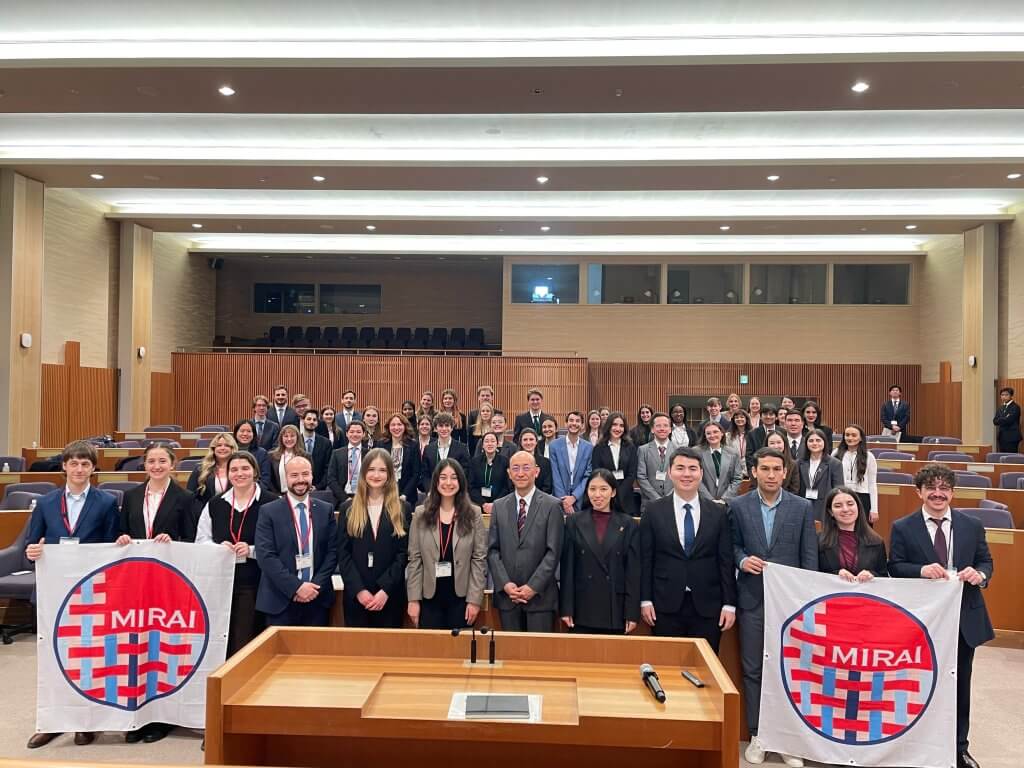
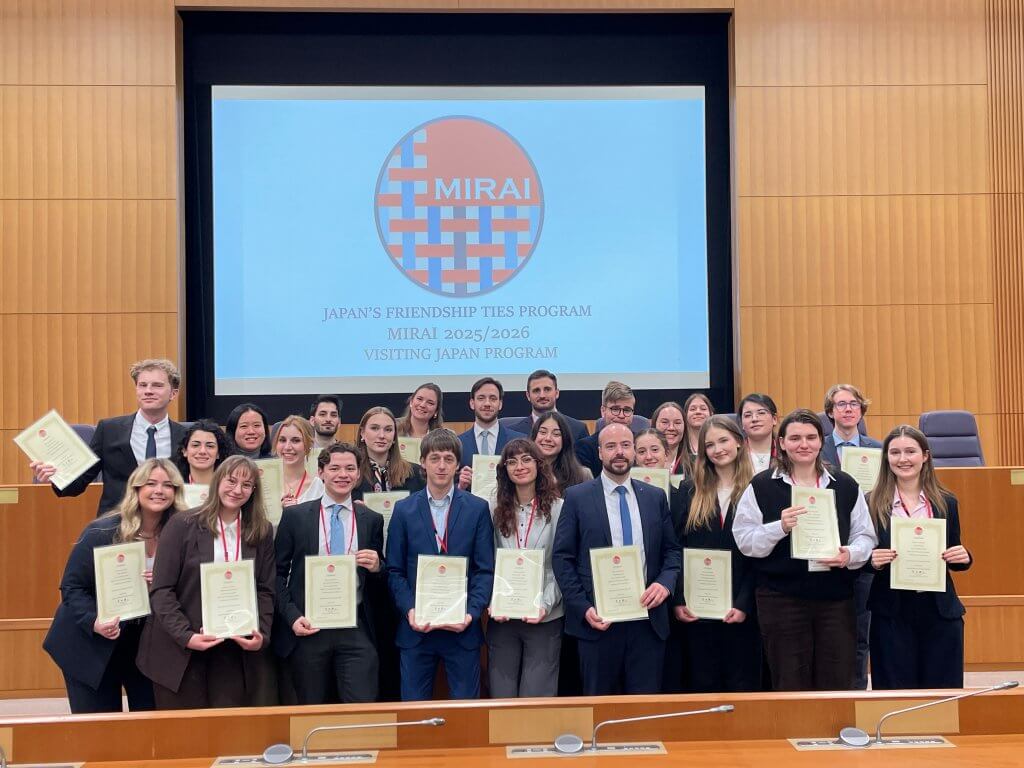
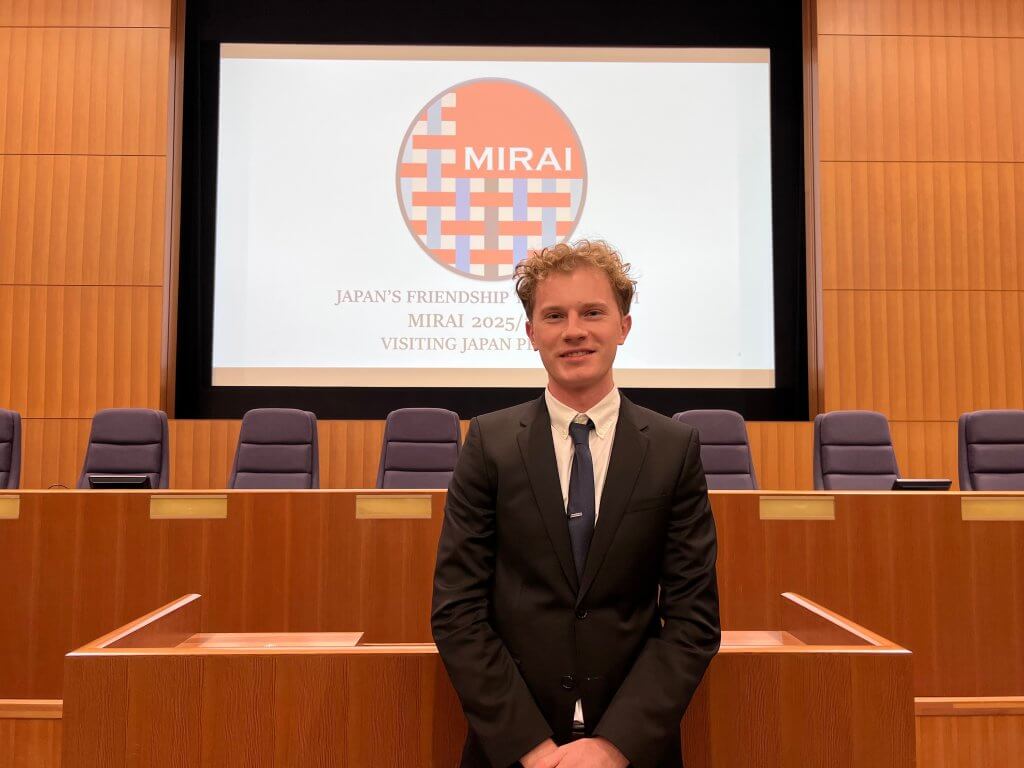
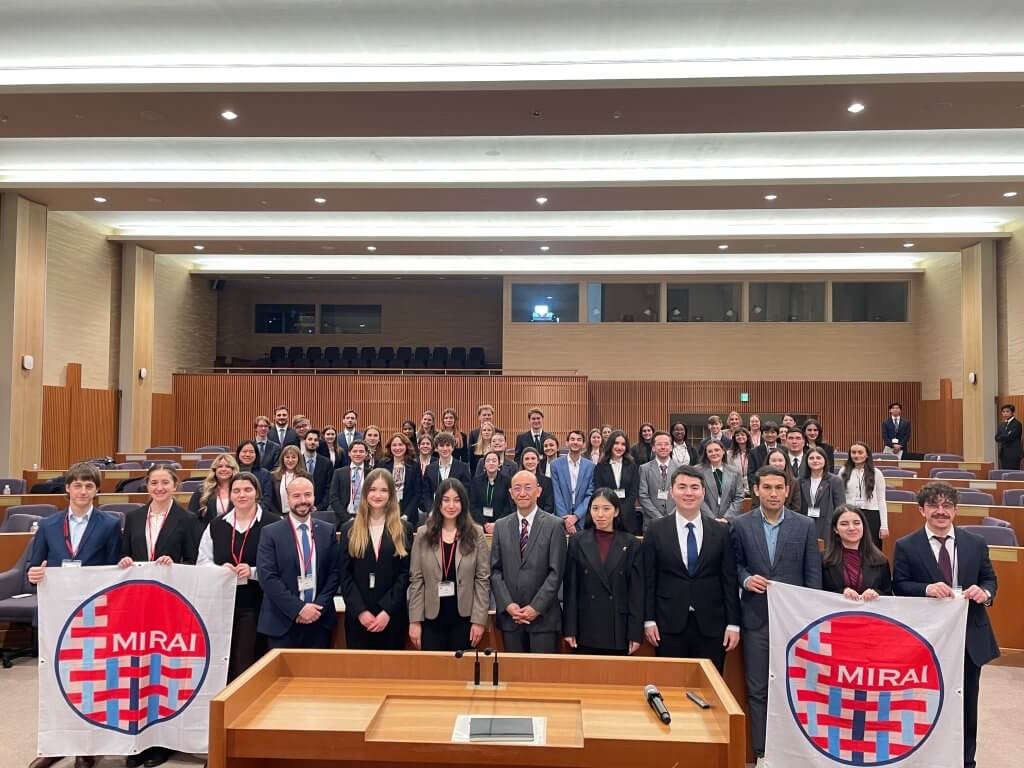
Milan Dobrovolný regularly follows updates from the International Office at the Faculty of Business and Economics. That’s where he came across a call for applications to the MIRAI programme, organized by the Japanese Embassy. “I was looking for information about bilateral agreements when I stumbled upon an open call from the Japanese Embassy for a one-week study stay in Tokyo. I filled out the application in about fifteen minutes,” he recalls. He first noticed the call in early October. In November, the Embassy contacted him to let him know he had been selected. By January, he was already on a plane to Tokyo. “I was very lucky, but the application doesn’t cost anything. Either it works out or it doesn’t. The worst thing you can do is not try at all,” he adds.
Tokyo, Top Universities and an Immersion in Japanese Culture
The programme lasts one week and follows a highly intensive schedule. Participants attend lectures at leading universities, meet with representatives of Japanese ministries, and take part in expert discussions. The entire stay is funded by the Ministry of Foreign Affairs of Japan. Participants do not pay for transport, accommodation, meals, or flights. “Out of our own pockets, we only spent money on the occasional snack or small personal items. Otherwise, everything was fully covered,” Milan says.
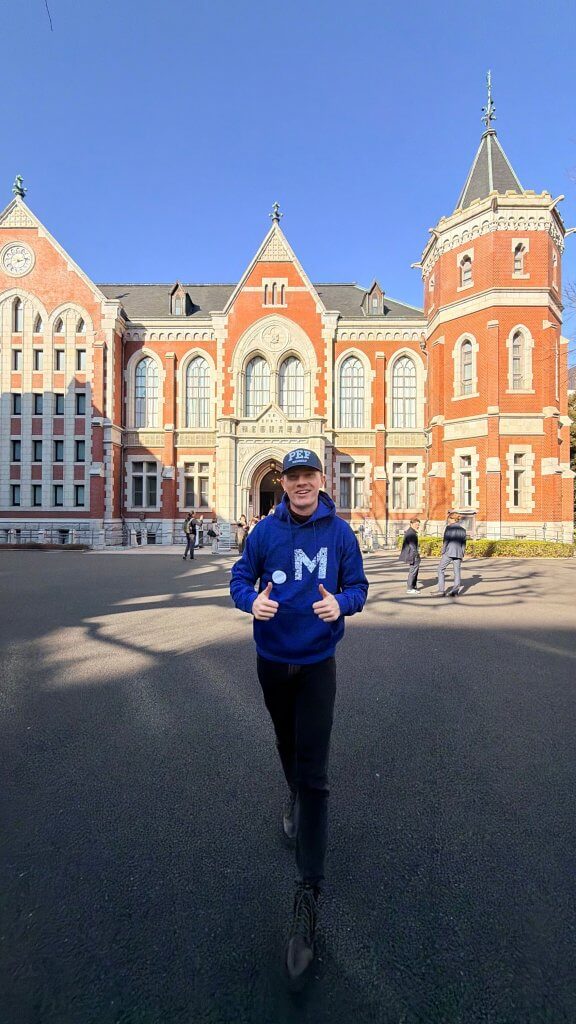
During the week-long stay, Milan visited one of Japan’s most prestigious universities, Keio University, where he attended lectures delivered by leading international relations scholars Yuichi Hosoya and Michito Tsuruoka.
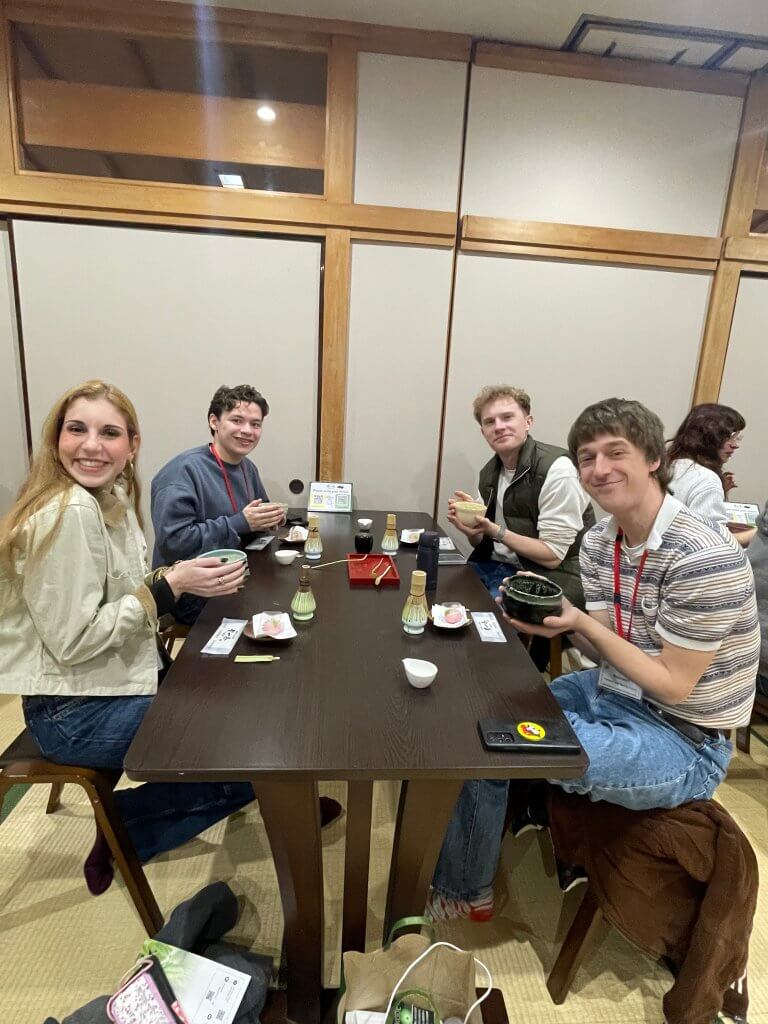
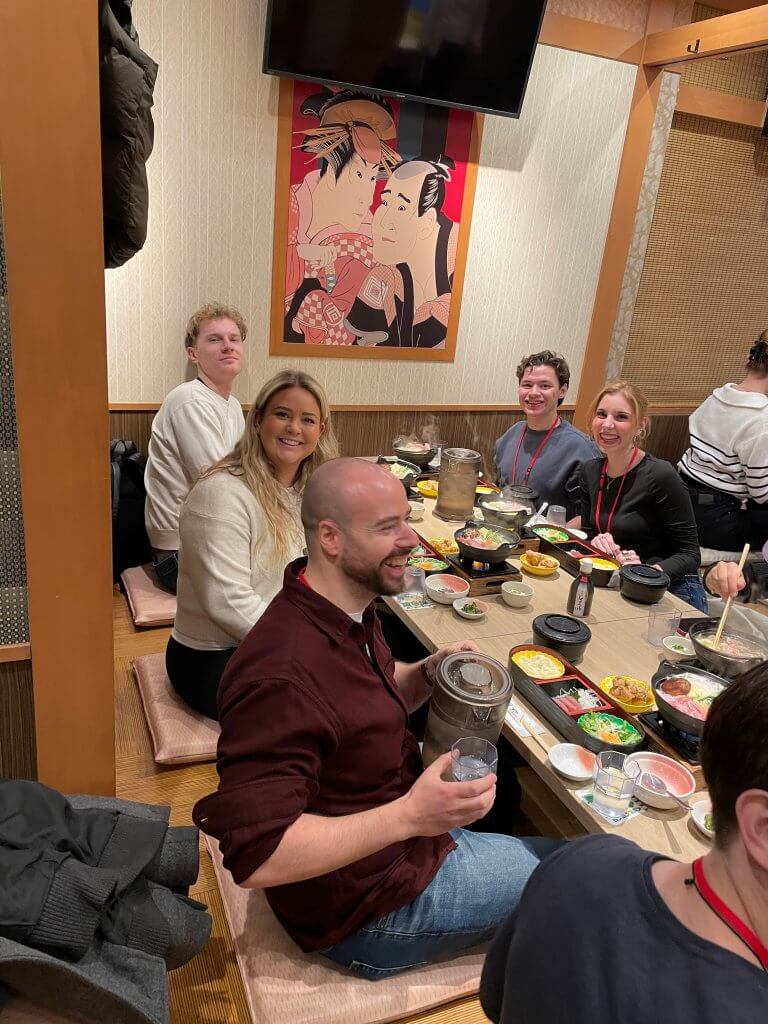
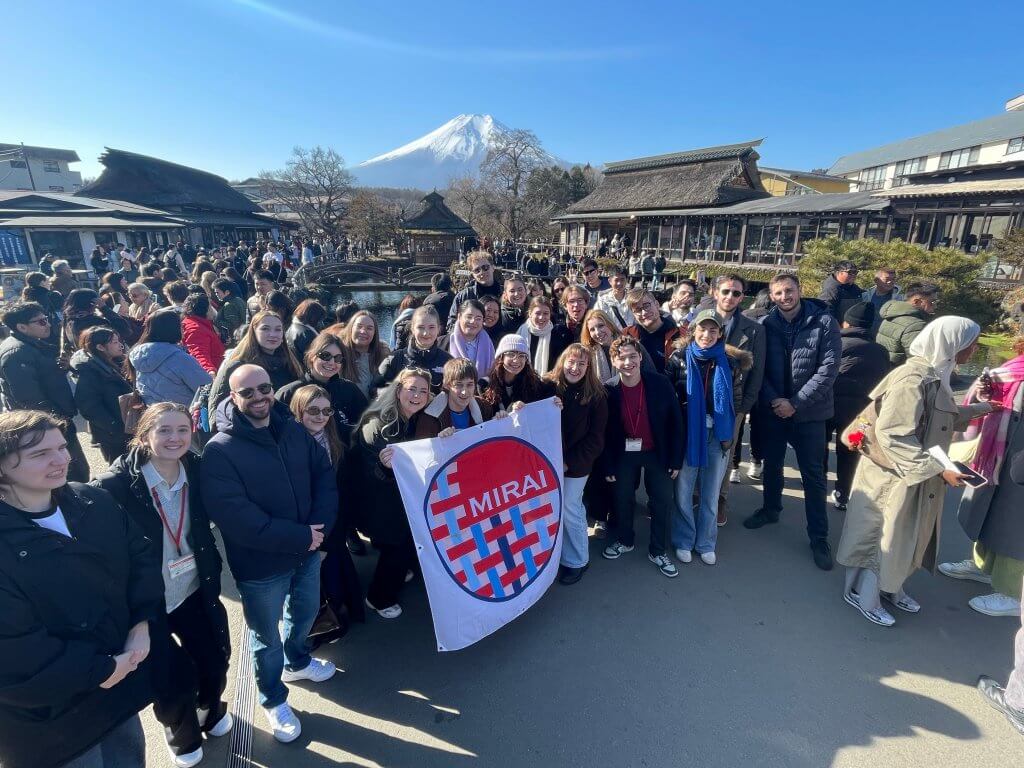
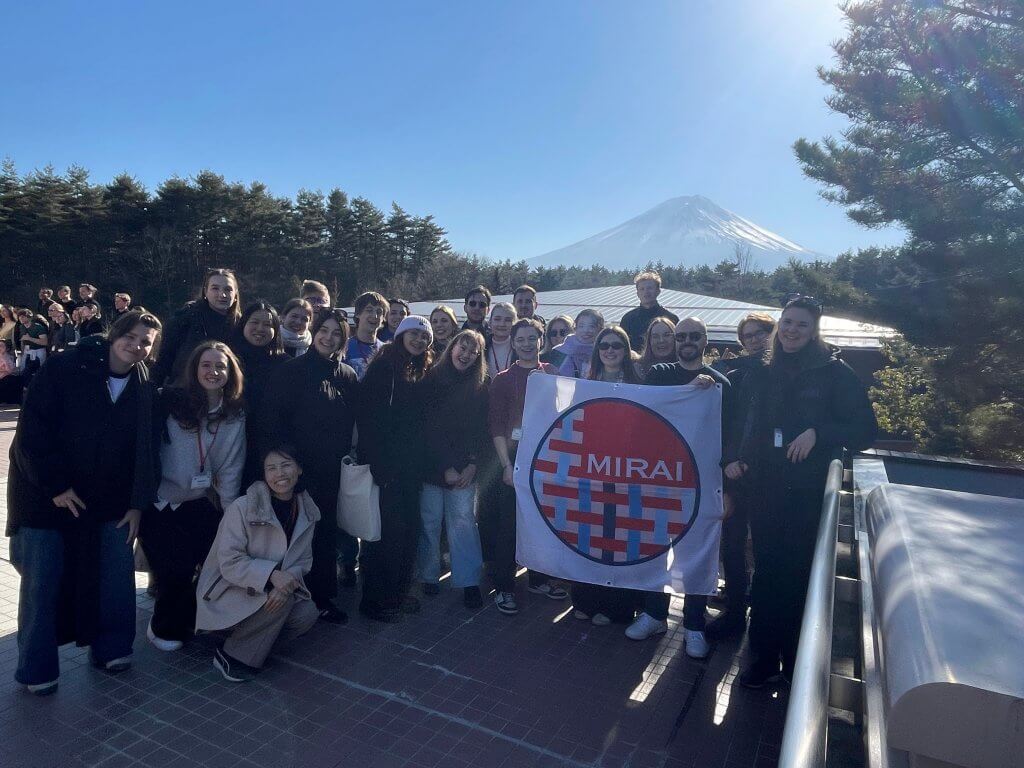
The programme did not take place solely in lecture halls. Milan also visited Japan’s Ministry of Foreign Affairs and the Ministry of Defense, gaining first-hand insight into the country’s diplomatic and security agenda. The week offered a cultural dimension as well. Participants tried their hand at preparing traditional matcha tea, visited historic temples, and enjoyed views of Mount Fuji. “We were very lucky that Fuji revealed itself. That doesn’t happen often. The Japanese believe that catching a glimpse of Mount Fuji brings good fortune, as it is shrouded in mist for much of the year,” Milan says. He adds that after the official programme each day, participants had time in the evening to explore Tokyo on their own and experience the city’s atmosphere from a more personal perspective.
Who Can Apply for the MIRAI Programme?
MIRAI stands for the Mutual-understanding, Intellectual Relations and Academic Exchange Initiative. The programme is built on the idea of fostering mutual understanding and long-term cooperation between Japan and European countries. It is open to students from all academic disciplines. There is no requirement for a specific field of study; what matters most is a genuine interest in Japan, international cooperation, and a willingness to stay engaged even after returning home.
Each year, the programme offers several thematic tracks. This year, two out of four areas were open to Czech students. Milan chose the track on Diplomacy and Security Policy. “I study marketing at the Faculty of Business and Economics, but I’ve long been interested in politics and international relations. I collaborate with the European Commission and occasionally attend workshops in Brussels. The diplomacy track appealed to me because it aligned with my personal interests beyond my field of study,” he explains.
How to Apply for the MIRAI Programme
Competition for the programme grows every year. According to Milan, it is crucial for applicants to demonstrate a clear connection to the track they are applying for. Previous work experience and a sustained interest in Japan and international cooperation are also valuable. “You need to stand out. A general statement of motivation isn’t enough. You have to describe specific experiences and, most importantly, explain what you can contribute to the programme and how you plan to use the experience once you return home,” he says.
The impact after returning home plays a key role. The organisers are not just looking for participants for a one-week trip—they are seeking future builders of relationships between the two countries. “I had to explain how I would share the programme with others. I proposed giving lectures at my university, speaking at cultural centres, or doing interviews to share my experiences,” Milan says.
A Selective Programme for Motivated Students from Top Universities
Interest in the programme is enormous. This year, around 6,000 students from all over the world applied. Only twenty were selected for Milan’s thematic group. “Because the programme is so highly selective, all the participants were incredibly inspiring. There were PhD students, people with international experience, young UN delegates, and students of international relations and Asian studies. They came from prestigious European universities, such as the University of Cambridge and University of Oxford,” Milan describes.